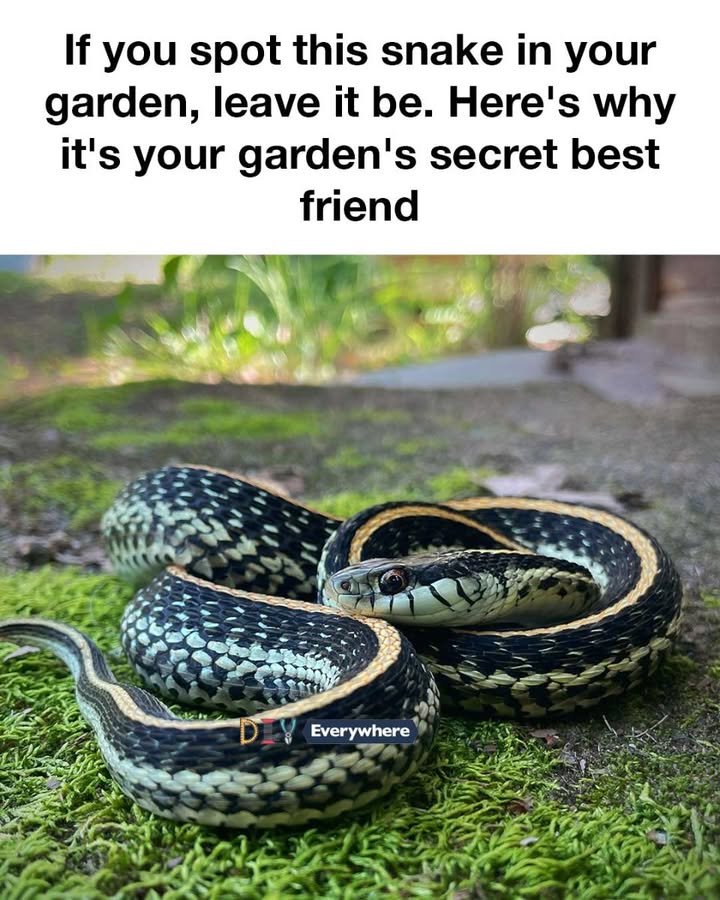
🐍 If You Spot This Snake in Your Garden, Leave It Be — Here’s Why It’s Your Garden’s Secret Best Friend
There are few wildlife encounters that make a gardener’s heart skip a beat the way spotting a snake can. That sudden flick of motion in the grass, the graceful sinuous body gliding along groundcover, can instantly trigger fear, alarm, and the instinct to get rid of it. But here’s the twist: in many cases, seeing a snake in your garden isn’t a problem — it’s a huge benefit. In fact, some snakes are among the very best helpers your garden can have.
This article dives deep into why you should often leave that snake alone, explains the ecological balance snakes support, and lays out how these misunderstood reptiles can quietly make your garden healthier, safer, and more productive.
🧠 1. Understanding Your Initial Reaction
But here’s a vital nuance: most snakes that visit gardens are entirely harmless to you, your kids, and your pets, and actually provide ecological benefits.
Before you act, it helps to understand this difference.
🌿 2. Not All Snakes Are Dangerous — Most Are Harmless
In gardens worldwide, the most commonly encountered snakes are non‑venomous species that pose no real threat to humans or pets. For example:
-
Garter snakes — often the species people see in gardens, harmless and non‑venomous.
-
Rat snakes / corn snakes — excellent at controlling rodent populations and also harmless.
-
Brown snakes and other small colubrids — shy, non‑aggressive, and typically avoiding people.
These snakes are often mistaken for more dangerous species simply because they look like what people think a snake should look like. But their behavior and biology tell a very different story: they’re shy, avoid confrontation, and are far more interested in food (insects and small animals) than in people.
Unless you live in an area with venomous native snakes (e.g., parts of North America, Africa, Asia, or Australia), the chances that a snake in your garden is harmful are low. Even then, most venomous species still try to avoid humans.
🍽️ 3. Snakes Are Natural Pest Controllers
Here’s how and why:
🐁 Rodent Control
Rodents — like mice, rats, voles, and gophers — are among the top pests gardeners fight. They chew roots, nibble seedlings, and spread disease. Snakes feed on these same rodents.
Larger snakes — such as rat snakes or corn snakes — specialize in hunting rodents. By reducing rodent numbers without poison or traps, snakes help protect plants and even reduce disease spread.
🐌 Insect and Slug Predators
Smaller snakes like garter snakes feast on slugs, earthworms, insects, and other small invertebrates that can damage crops and ornamentals. Slugs alone can destroy young seedlings and tender greens.
By naturally keeping these populations in check, snakes help maintain a healthier, more balanced garden ecosystem.
🍃 4. A Healthy Garden Ecosystem Needs Predators
Ecology isn’t just about plants and sunshine — it’s about balance. Every ecosystem functions through a web of interactions among organisms. Snakes play a vital role:
✔️ They help buffer pest spikes
When pest populations increase, snakes respond by eating more of them. This feedback loop helps prevent sudden pest outbreaks that can devastate gardens.
✔️ They indicate biodiversity
✔️ They provide food for other wildlife
Birds of prey (like hawks and owls) and some mammals feed on snakes. A garden that sustains snakes may also support healthy bird populations.
So rather than seeing snakes as a problem species, many ecologists argue that they’re a keystone species in suburban and rural ecosystems.
💡 5. Why Snakes Don’t Harm Your Garden — or You
Let’s address two big misunderstandings:
🟢 Snakes won’t eat your plants
Snakes are carnivores. They do not eat leaves, flowers, fruits, bulbs, or vegetables. Ever. Their digestive systems simply aren’t designed for plant material.
🟢 Most won’t bite unless provoked
Non‑venomous snakes rarely bite. Their first instinct when disturbed is to flee, not fight. In many cases, the “bite threat” is actually just a defensive scare tactic when they’re cornered, not a predatory action.
Only highly venomous species inject venom, and even they prefer avoiding humans whenever possible.
🪱 6. How Snakes Interact With Garden Habitats
🐾 Shelter and Environment
Snakes are attracted to gardens that offer:
-
Cool, shaded spots
-
Moist groundcover
-
Places to hide (rocks, logs, mulch)
-
Abundant prey (rodents, slugs, insects)
These features are good for garden biodiversity — and that’s why snakes visit. It doesn’t mean your garden is unsafe — it means it’s alive.
🌿 7. How to Tell a Beneficial Snake From a Dangerous One
If you’re concerned about venomous snakes, here are some tips:
🔍 Signs of a non‑venomous snake:
-
Slender body shape with relatively small head
-
Quick avoidance of humans
-
Found near food sources like rodent tunnels
-
Often harmless species like garter or rat snakes
⚠️ Signs of potential danger:
-
Thick, muscular body with a broad triangular head (in many but not all venomous species)
-
Rattlesnake rattle (in North America)
- Continue reading…
