When a $25 Tip Wasn’t Enough — How One Man’s Tip Refusal Ignited a Tipping Culture Firestorm
If you’ve ever paused at a dinner bill wondering how much to tip — or why you should tip at all — you’re not alone. Tipping culture, especially in the United States, has become one of the most emotionally charged etiquette debates of recent years. What was once a gesture of appreciation has become a battleground of expectations, social norms, economics, and even morality. And all it took to reignite the conversation again? A man leaving a $25 tip on a roughly $198 restaurant bill — only to have the server refuse it.
1. The Incident That Started It All
According to a Reddit post shared by u/Koiguy94, a diner and his group had a pleasant evening out — until the check arrived. The bill was $197.96, and the diner left a $25 tip — roughly 12.6% of the bill — which he felt was more than fair for the service received.
However, rather than thanking them, the server took the tip and placed it back on the table, explaining that he only accepted tips in the range of 18–20%. The diner was stunned: he felt disrespected and rejected. “If I’m going to give you extra money, then just accept it — don’t ask for more,” he wrote.
This moment, involving just a few dollars and a piece of plexiglass, tapped into decades of tension about tipping norms.
2. Why Tipping Matters (and Why It Hurts)
A. Tipping in the U.S.: Not Just Manners, But Income
In the U.S., tipping isn’t just polite — it’s structural. Unlike many countries where service workers receive a living wage from employers, American tipped workers are often paid well below minimum wage, with tips making up the difference. This economic reality creates a situation where restaurant workers depend on tips as a significant portion of their income.
B. Social Contracts and Emotional Labor
Tipping isn’t just economic; it’s social. When customers tip, they’re signaling satisfaction and appreciation — and when they don’t, it’s often interpreted as criticism. That emotional weight has turned tipping into a form of social currency, where leaving anything less than a “standard” percentage can be seen as judgmental or rude.
The Reddit thread and ensuing discussions were polarizing:
Support for the Server
Some commenters sided with the server, arguing that the service industry relies on tips because employers don’t pay livable wages. One Reddit user defended the idea of tipping generously in cash so workers don’t “have to claim it.”
For many waitstaff and hospitality workers, tipping is not optional — it’s a financial lifeline. Without tips, they often struggle to cover basic living costs.
Support for the Diner
Others brushed off the idea that a server should reject a genuine gesture of gratitude. One commenter bluntly stated, “If I’m going to give you extra money, then just accept it — don’t ask for more.”
Some diners feel that tipping percentages have spiraled out of control; that it’s unreasonable to turn down what someone sincerely offered.
Beyond the specifics of the incident, other voices in the debate used this moment to question the entire system. “Everybody should stop tipping ideally, so these companies pay their employees properly,” one commenter wrote.
This sentiment resonates with a growing movement advocating for wage reform rather than tip reliance.
4. How Digital Payment Systems Amplify Pressure
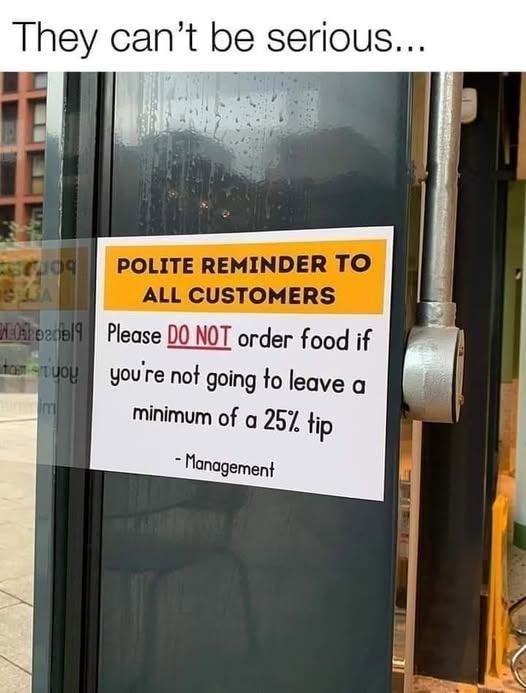
The debate about tipping isn’t limited to sit‑down restaurants. Digital point‑of‑sale systems increasingly prompt customers to choose between high preset tip suggestions — sometimes as high as 25% or 30% — before they’ve even eaten. These screens often subtly nudge customers toward larger tip amounts, a phenomenon known as “tipflation.”
TIP default prompts can make consumers feel guilt or pressure about tipping, even if the service was minimal or non‑existent. Some people report feeling like they have to tip just to avoid awkwardness or judgment.
This digital nudge escalates tipping from a voluntary show of appreciation into something that feels mandatory — and for many, that shift breeds resentment.
5. Cultural Comparisons: Tipping Around the World
The dramatic expectations around tipping in America are not universal. In many countries tipping is rare or even frowned upon — service is included in the price, and workers earn fair wages from employers.
For example, in South Korea, tipping is still relatively uncommon, and many people view the practice as confusing or unnecessary. Restaurants and cafes that introduced tip jars received significant backlash online, with some customers insisting the culture had no place in Korean society.
In contrast, American diners often encounter tipping screens not just in restaurants but at coffee shops, quick‑serve counters, and even self‑checkout kiosks — blurring the line between service that deserves extra compensation and routine transactions.
6. The Psychology Behind Tipping
Tipping isn’t just economic; it’s psychological. Research shows that people experience a type of “guilt tipping” — where they tip not out of sincere gratitude, but out of discomfort, fear of judgment, or social anxiety. According to recent studies, many consumers tip more than they feel is deserved simply because they feel pressured by cultural norms and digital prompts.
These pressures can create internal conflict: people want to be generous but also resent feeling forced to be generous. That tension lies at the heart of the tipping debate.
7. Arguments for and Against Tipping Reform
Let’s break down the major arguments on both sides:
Arguments For Maintaining Tipping:
Supports service workers who rely on tips for income.
Rewards exceptional service directly and immediately.
Gives customers control over compensation based on performance.
Many in the service industry say tips remain essential because base wages are too low. Without tips, servers could see significant income loss — and many would struggle financially.
Arguments Against Traditional Tipping:
Creates wage inequality and destabilizes income.
Places a burden on customers rather than employers.
Encourages tip manipulation through digital default prompts.
Disproportionately rewards certain workers (e.g., young attractive servers) over others, which critics say reflects bias.
Some advocates want to abolish tipping altogether, pushing instead for mandatory living wages and fair salaries from employers. Others suggest tipping should only be for truly exceptional service, not expected by default.
8. Economic Realities: Who Actually Benefits?
Continue reading…
