Avoid Heinz Ketchup Like the Plague
Ketchup is one of the most recognizable condiments on Earth. It sits on diner tables, fast-food trays, picnic blankets, and childhood memories. And towering above all other brands is Heinz — a red-and-white label so dominant that for many people, “ketchup” and “Heinz” are effectively the same word.
Heinz Ketchup isn’t just a condiment; it’s a symbol of how industrial food culture reshapes taste, habits, health, and even our emotional attachments to what we eat. Avoiding Heinz Ketchup isn’t about snobbery, conspiracy, or hating a brand for the sake of it. It’s about recognizing how something so small and familiar can quietly represent everything wrong with modern processed food.
If you care about nutrition, real flavor, food autonomy, or simply not being manipulated by branding, Heinz Ketchup deserves a long, hard side-eye.
Let’s dig in.
1. The Sugar Problem Nobody Wants to Talk About
Heinz Ketchup is, functionally, a sugar delivery system disguised as a tomato product.
One tablespoon contains roughly 4 grams of sugar. That might not sound outrageous until you remember:
Nobody uses one tablespoon
Ketchup is added on top of already carb-heavy foods
Fries? Sugar.
Burger? Sugar.
Eggs? Sugar.
Hot dog? Sugar.
Heinz normalizes the idea that sweetness belongs everywhere.
The issue isn’t just the amount — it’s the conditioning. From childhood, Heinz trains palates to associate tomatoes with sugar rather than acidity, umami, or complexity. This rewires expectations so that real tomato-based sauces taste “bland” or “too sharp” by comparison.
It’s not that people crave tomatoes.
They crave sugar with a tomato costume.
2. Tomatoes, But Make Them Industrial
The wholesome image on the bottle suggests fresh tomatoes lovingly transformed into ketchup. Reality is far less romantic.
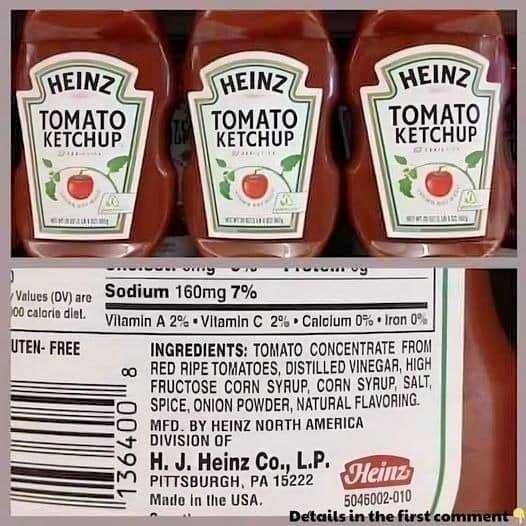
Heinz Ketchup is made from tomato concentrate, not fresh tomatoes. Concentrate allows:
Easier global shipping
Massive cost savings
Extreme standardization
But concentration strips away nuance. What’s left is tomato essence, rebuilt with sugar, vinegar, salt, and flavor adjustments to achieve the same taste every single time.
Consistency is a triumph for logistics.
It’s a tragedy for food.
Real tomatoes vary by season, soil, and variety. Heinz eliminates that variability entirely, replacing nature with formula.
3. The Vinegar Punch as a Mask
That sharp vinegar bite? It’s not sophistication — it’s camouflage.
Acidity in Heinz Ketchup serves several functions:
Balances extreme sweetness
Preserves the product
Distracts from lack of depth
Creates a “tangy” illusion
Vinegar is doing heavy lifting here, covering up how flat the base product actually is. Without it, Heinz Ketchup would taste aggressively sweet and strangely empty.
Compare this to a fresh tomato relish or house-made ketchup and the difference is immediate. Real tomato flavor lingers. Heinz hits hard, then disappears.
It’s loud, not rich.
4. How Heinz Ketchup Colonized Taste
One of Heinz’s greatest achievements isn’t the product — it’s taste dominance.
Because Heinz is everywhere:
Restaurants default to it
Fast-food chains normalize it
Kids grow up thinking it’s “correct”
Alternatives are judged against it
Try serving homemade ketchup to someone raised on Heinz and watch the reaction:
“Something’s off.”
“This tastes weird.”
“Why isn’t it sweeter?”
That’s not a failure of the alternative.
That’s palate capture.
Heinz didn’t just sell ketchup. It trained millions of people to reject anything that doesn’t taste like Heinz.
5. Branding So Strong It Overrides Thought
Heinz branding is emotionally powerful:
Nostalgia
Americana
Trust
“Classic” status
People defend Heinz Ketchup not because they’ve compared it thoughtfully, but because it feels right. That emotional attachment short-circuits critical thinking.
Suggest that Heinz isn’t great and watch how quickly the reaction becomes personal:
“I grew up with it.”
“It’s always been the best.”
“You’re overthinking ketchup.”
That’s brand loyalty doing exactly what it’s designed to do.
6. The Health Halo That Isn’t Earned
Because Heinz Ketchup contains tomatoes, it often sneaks into the “not that bad” category.
But let’s be clear:
It’s not a vegetable serving
It’s not nutritionally dense
It’s not meaningfully contributing vitamins in real-world portions
Calling ketchup “healthy” because it once involved tomatoes is like calling candy “fruit-based” because it contains fruit juice concentrate.
Heinz benefits enormously from this confusion.
7. Ultra-Processed and Proud of It
Heinz Ketchup is a textbook ultra-processed food:
Multiple refined inputs
Shelf-stable for extreme lengths of time
Designed for mass production, not nourishment
Optimized for craveability
Ultra-processed foods aren’t just empty calories — they actively shape eating behavior. They encourage:
Overconsumption
Flavor dependency
Reduced tolerance for subtlety
When your taste buds are trained on Heinz, whole foods start to feel unsatisfying.
That’s not accidental.
8. The Way It Hijacks Meals
Ketchup is supposed to complement food. Heinz often overpowers it.
Put Heinz on:
Eggs → sugar bomb
Steak → saccharine glaze
Rice → confusing sweetness
Vegetables → candy coating
Instead of enhancing, it flattens everything into the same sweet-vinegar profile. Every meal starts to taste like Heinz.
That’s culinary colonization.
9. Cultural Laziness in a Bottle
Heinz Ketchup represents a kind of food apathy:
“Just put ketchup on it.”
“Doesn’t matter how it tastes — Heinz fixes it.”
“Good enough.”
This mindset discourages:
Learning seasoning
Exploring spices
Appreciating regional flavors
Developing cooking skills
Why bother when Heinz is always there to rescue mediocrity?
10. There Are Better Options — Everywhere
Avoiding Heinz doesn’t mean giving up ketchup entirely.
Better choices include:
Low-sugar ketchups
Fermented tomato sauces
Homemade ketchup
Tomato chutneys
Salsa or pico de gallo
Harissa or chili paste
Even simple crushed tomatoes with salt
Once you step away from Heinz, your palate adjusts surprisingly fast. What once tasted “normal” begins to feel cloying.
And suddenly, food tastes like food again.
11. The Global Standardization Problem
Heinz exports one flavor profile across continents, flattening local food cultures.
The same ketchup appears in:
American diners
European cafes
Asian fast-food chains
Middle Eastern restaurants
Local condiments get sidelined in favor of the red bottle. That’s not convenience — it’s cultural erosion.
12. Why People Get Defensive About It
Heinz Ketchup criticism often triggers emotional pushback because:
It’s tied to childhood
It feels like an attack on comfort
It challenges routine
It suggests manipulation
Nobody likes realizing their preferences were engineered.
But recognizing that doesn’t mean you were foolish — it means the system worked.
13. Breaking the Habit Is Easier Than You Think
Most people who stop using Heinz report:
Initial discomfort
Then rapid adaptation
Then inability to go back
Sugar withdrawal is real — even in condiments.
Give it two weeks. Your taste buds will recalibrate.
14. This Isn’t About Moral Superiority
Avoiding Heinz Ketchup isn’t about being better than anyone else.
It’s about:
Awareness
Intentional choice
Respecting your palate
Wanting more from food
You can still enjoy comfort foods without defaulting to the most aggressively engineered option on the shelf.
15. The Plague Metaphor Fits
A plague spreads because it’s:
Ubiquitous
Familiar
Hard to question
Self-reinforcing
Heinz Ketchup isn’t dangerous in isolation. But as a symbol of ultra-processed food culture, it represents a slow erosion of taste, health, and food literacy.
Continue reading…
