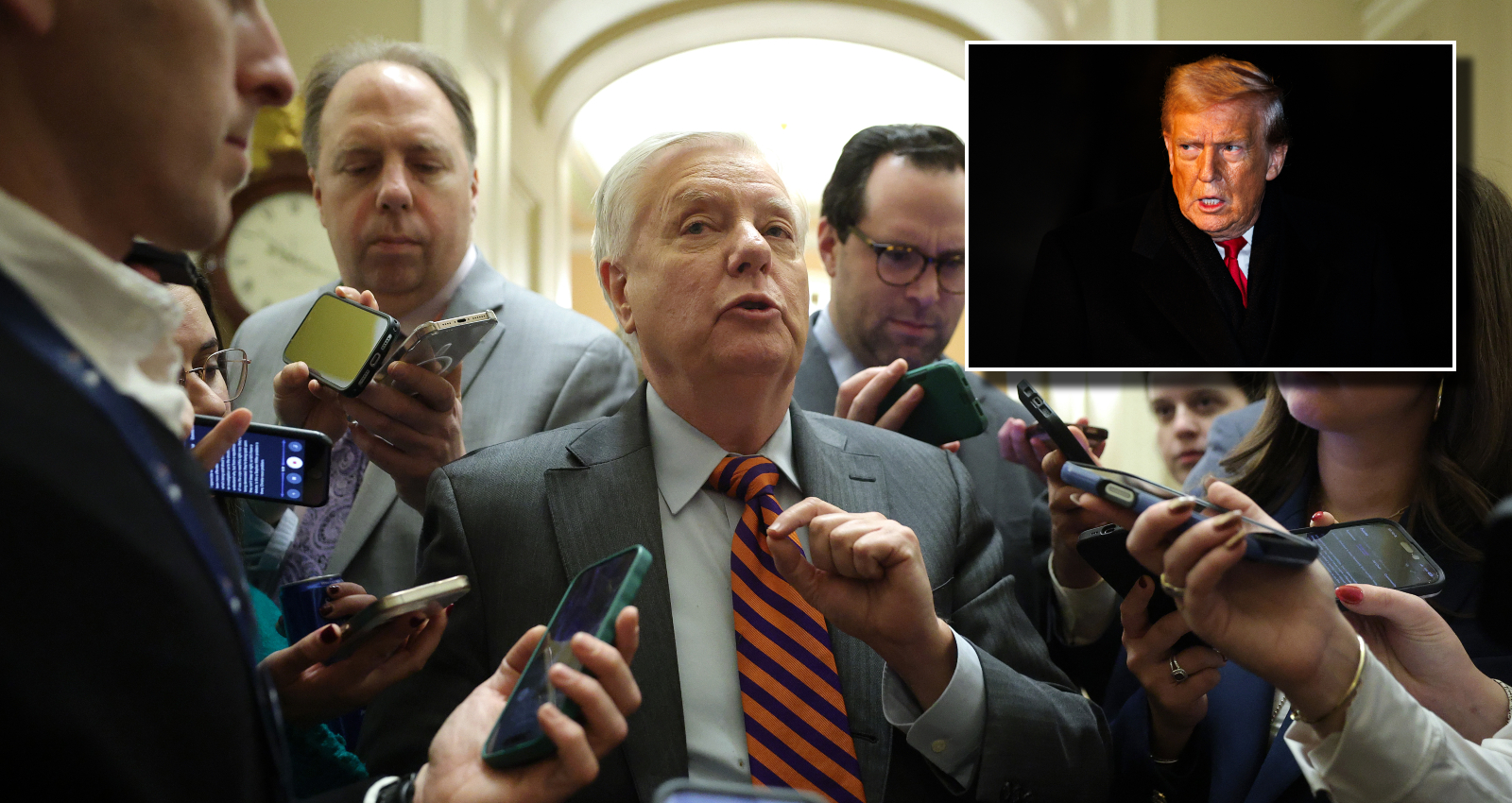
Furious Graham Warns Speaker Johnson Over Trump-Backed Spending Bill
An in-depth exploration of the political showdown threatening government funding and GOP unity
Background: What is the Trump-Backed Spending Bill?
In early 2026, the U.S. Congress faced the prospect of a partial government shutdown unless lawmakers passed a new federal funding package. After negotiations in the Senate, a $1.2 trillion appropriations bill — broadly supported by President Trump — was approved by the Senate with bipartisan support. That bill was designed to fund most government agencies through the end of the fiscal year while providing a short-term extension for key departments like the Department of Homeland Security (DHS) to allow for continued debates over immigration policy and enforcement reforms.
The package was narrowly passed by the House of Representatives on February 3, 2026, in a 217-214 vote, reflecting deep divisions even within the Republican majority. It then went to Trump, who signed the bill, officially ending a partial shutdown.
However, the road to that vote was fraught, and internal GOP disputes over the contents of the bill — especially provisions that had been modified or removed — became a flashpoint for rising tensions between factions of the party.
Sen. Lindsey Graham’s Outrage: What Happened?
Senator Lindsey Graham, a long-time Trump ally, expressed deep frustration with how Speaker Johnson handled key legislative language on a related legal issue — language that Graham believed should have been preserved in the spending bill. Specifically:
Graham was incensed that the House leadership removed or altered provisions related to a legal mechanism sometimes referred to as “Arctic Frost,” which would have allowed senators certain legal remedies if their phone records were accessed during investigations — including those related to January 6, 2021.
He publicly criticized Johnson for sidelining these provisions, warning that he would not forget the decision and chastising the Speaker for what he perceived as an abandonment of Republican priorities in the negotiations.
Graham argued that the language removed by Johnson’s House GOP leadership was important to addressing concerns among Republican senators affected by federal investigations, particularly those tied to the January 6 Capitol attack scrutiny.
His ire was aimed not only at Johnson but also at the White House, reflecting the growing impatience among Senate conservatives who felt key priorities were being watered down or sacrificed for a short-term funding win.
The House Side: Johnson’s Perspective and Constraints
House Speaker Mike Johnson was thrust into a precarious position. With a narrow Republican majority in the House, any major legislative push — whether a spending bill, immigration policy, or funding measure — risked collapse unless he could thread the needle between competing GOP factions and a wary Democratic minority.
Johnson’s priorities included:
Securing bipartisan momentum so that the government could be funded before a shutdown caused broader economic and political disruption.
Navigating competing Republican demands — ranging from hard-line conservative fiscal hawks demanding deeper cuts to moderate members uneasy about omitting certain funding priorities.
This balancing act resulted in Johnson trying to protect broader funding compromises even at the cost of upsetting some GOP senators — including Graham. That effort culminated in the narrow House passage of the bill, which Johnson framed as a necessary measure to prevent further disruption.
However, critics on both sides of the aisle saw it differently:
Some Republicans accused Johnson of caving to Democrats or not fighting hard enough for GOP priorities.
Others argued that the bill’s terms failed to adequately curb spending, manage deficits, or tackle policy goals like immigration enforcement reforms.
Even after passage, conservative dissent persisted, with figures such as Senator Rand Paul and others voicing broader concerns about fiscal discipline, while Democrats continued to push for oversight and reforms tied to DHS operations.
Graham’s Warning: Political and Practical Implications
Graham’s public warning was notable not only for its sharp tone but also for what it signals about Republican politics in 2026:
1. Fracturing GOP Unity
Graham’s criticism highlighted fractures within the Republican Party that go beyond simple policy disagreements. His rebuke of the Speaker reflects:
A broader struggle over party identity, between pragmatists willing to compromise on temporary funding deals and ideologues demanding strict adherence to policy goals.
Rising tensions between House and Senate Republicans, with Senate conservatives feeling sidelined by House leadership’s negotiations.
This internal conflict threatens to complicate future legislation as Republicans attempt to govern with slim majorities in both chambers.
2. Impact on Future Investigations and Oversight
Many of Graham’s concerns stemmed from the removal of provisions tied to legal remedies around investigative practices. Although this may seem like a niche legal issue, it carries symbolic weight:
It signals GOP senators’ desire for stronger protections or leverage within federal oversight and legal processes.
Republicans who felt these protections were important saw their removal as a concession that weakened conservative leverage in broader cultural and political battles.
This tension could inform future disputes over judicial appointments, investigative oversight, and legislative priorities tied to accountability issues.
3. Presidential Influence and Party Dynamics
While both Johnson and Graham are Trump allies, the confrontation underscores how much influence (and pressure) the President exerts on internal GOP dynamics:
Trump’s role in pushing this spending package is clear — he backed the deal, stressing swift action to prevent shutdown fallout.
Yet even with Trump’s backing, Republican leaders struggled to maintain unity. Some members openly pushed back on Trump’s priorities or sought to modify the package to better align with their own policy goals.
This dynamic of presidential influence plus intra-party dissent has become a defining feature of Republican politics, with Johnson often walking a tightrope between party expectations and broader governance challenges.
How the Funding Bill Fight Played Out
The legislative saga unfolded against the backdrop of an approaching partial government shutdown. The Senate had approved a bipartisan funding package — but Johnson faced procedural constraints, such as the House’s rule requiring text publication 72 hours before a vote. That delay helped trigger partial shutdown actions beginning January 31, 2026.
When the House finally brought the measure to a vote, it passed by the narrowest of margins. Some Democrats supported the bill, hoping to protect key agency funding, while some Republicans opposed it over concerns like voter roll verification provisions (like the SAVE Act) and immigration enforcement language.
Once passed, the bill quickly moved back to the Senate and onto President Trump’s desk, where it was signed — officially reopening much of the government. However:
Funding for DHS was extended only temporarily.
Key immigration and enforcement debates were postponed.
Many conservative priorities were seen as sidelined or diluted.
This temporary resolution leaves significant points of contention unresolved, setting the stage for ongoing fiscal and political clashes.
Broader Political Ramifications
A. Republican Party Cohesion Under Stress
The conflict between Graham and Johnson is emblematic of deeper strains within the GOP. Republicans are sharply split between:
Hard-line conservatives pushing for aggressive policy priorities and strict fiscal cuts.
Institutional Republicans focused on governance, compromise, and avoiding political crises like shutdowns.
Trump loyalists who back the President’s agenda but may disagree on specifics or legislative tactics.
These factions often clash over funding levels, investigations, judicial issues, and legislative strategy, making unified action difficult, even with majorities in both chambers.
B. Legislative Strategy and Future Funding
The temporary victory in passing the Trump-backed bill is likely to lead to further battles:
Funding for DHS and immigration reform remains unresolved.
Budget negotiations through the rest of the fiscal year will test GOP unity again.
Other controversial measures — including debt ceiling extensions, social spending cuts, and tax policy — face future hurdles.
If conservative senators like Graham maintain public disagreements with leadership, future negotiations will be more fraught.
C. Electoral and Policy Consequences
These internal GOP tensions could have consequences for upcoming elections:
Republican voters disenchanted by what they see as compromises may pressure their representatives or challenge them in primaries.
Democrats could leverage GOP divisions to appeal to moderate or undecided voters concerned about budget priorities and governance stability.
Additionally, policy outcomes on immigration, federal investigations, and fiscal policy remain uncertain as both parties jockey for advantage.
Looking Ahead: The Next Political Battles
The funding bill saga clearly will not be a one-off. Key unresolved issues include:
Long-term DHS funding and immigration enforcement reforms.
Continue reading…
