📌 I. The Incident That Triggered It All: The Killing of Alex Pretti
On January 24, 2026, federal immigration agents — part of a surge operation in Minneapolis — shot and killed 37-year-old ICU nurse Alex Pretti during an enforcement action in downtown Minneapolis. Pretti, a United States citizen, was legally carrying a firearm with a permit. Video captured parts of the encounter showing Pretti being maced, tackled to the ground, and ultimately shot multiple times by at least one federal agent.
Pretti’s death came just weeks after another fatal shooting by a federal law enforcement officer — the January 7 killing of Renee Good — also during Minneapolis operations.
The killings intensified already heated debates over “Operation Metro Surge,” a broader federal immigration crackdown involving Immigration and Customs Enforcement (ICE) and Customs and Border Protection (CBP) Border Patrol agents deployed in Minneapolis, Chicago, Charlotte, and other cities.
🧑✈️ II. Who Is Gregory Bovino?
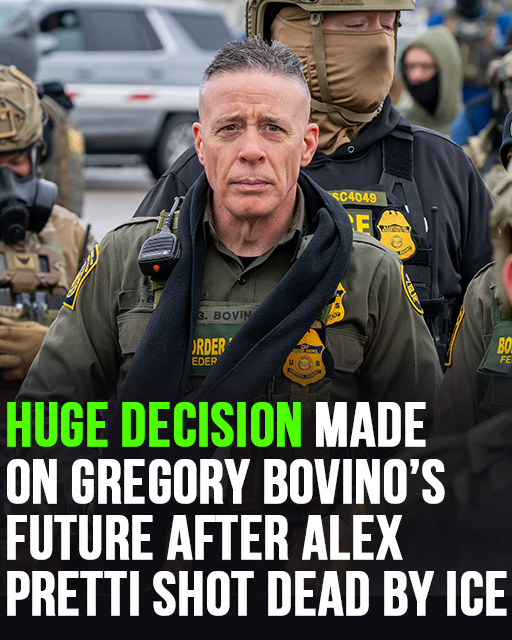
Gregory (or Greg) Bovino is a senior Border Patrol commander who, since 2025, had become the public face of the Trump administration’s interior immigration enforcement strategy. He was given the special title “Commander at Large” — a non-traditional role created within CBP — to lead high-visibility enforcement deployments in cities across the country with Democratic leadership.
Bovino’s role evolved beyond typical law enforcement oversight — he frequently conducted television appearances, media interviews, and engaged in social media battles with critics, sharply defending aggressive ICE and Border Patrol tactics and criticizing local officials.
In Minneapolis, this highly public stance became controversial amid intense protests and scrutiny after Pretti’s death. Bovino’s repeated characterization of the killing — including claims that Pretti intended to “massacre law enforcement officers” — was widely challenged by video evidence and critics.
🛑 III. The Major Decision: Bovino’s Removal and Future
1. Bovino Stripped of “Commander at Large” Title
After mounting political and public pressure in the wake of Pretti’s shooting, the Trump administration made a major leadership change:
The administration appointed Tom Homan, former acting ICE director, as the new leader of federal immigration operations in Minnesota, reporting directly to the White House.
This shift signals a significant breakup from the administration’s earlier strategy of showcasing aggressive interior immigration enforcement — a strategy Bovino personified.
2. Reassignment to El Centro, California
Most reports indicate that Bovino will return to his former job overseeing CBP operations in El Centro, California — a conventional Border Patrol leadership post — rather than continuing in the national “at large” role.
A senior DHS official and multiple sources also suggest Bovino may retire soon after being reassigned, although DHS public statements have pushed back against claims he has been fully relieved of duties.
3. Social Media Access Restriction
In addition to the reassignment, Bovino was reportedly blocked from using his official CBP social media accounts — a move seen by analysts as a symbolic reprimand, given how central his online communications were to his nationwide profile.
Bovino’s reassignment is widely seen as a tactical shift by the Trump administration in response to multiple pressures:
Intense public outrage and protests after Pretti’s death.
Criticism from bipartisan political leaders — Democratic governors, mayors, and some Republicans expressing concern about federal tactics.
Increased calls from some Democrats to defund or overhaul ICE and DHS altogether.
Political critics view Bovino’s removal as damage control, attempting to rein in the most controversial symbol of aggressive enforcement without reversing the overall immigration strategy.
📊 2. Legal and Investigative Pressure
Following Pretti’s shooting:
The federal agents involved have been placed on administrative leave — a standard procedure during investigations, but one that contradicted Bovino’s earlier statement that they were still performing duties elsewhere.
A Minnesota state investigation is underway, with officials alleging federal authorities have resisted local investigative cooperation.
🏛️ V. National Reactions and Debate
🗣️ 1. Local and State Officials
Minnesota Governor Tim Walz demanded federal agents be withdrawn after Pretti’s killing.
Minneapolis Mayor Jacob Frey continues to push for cutting back Operation Metro Surge.
🎙️ 2. National Political Voices
Some Democratic governors, like California’s Gavin Newsom, called for DHS leadership — including Bovino and DHS Secretary Kristi Noem — to resign.
Illinois officials and others have renewed calls for ICE reforms or abolition.
🧑⚖️ 3. Legal and Civil Rights Groups
Civil rights organizations have amplified scrutiny of federal “surge” tactics, arguing that the Pretti shooting underscores broader issues in federal law enforcement oversight, accountability, and use of force — especially in domestic interior operations that differ from traditional border enforcement roles. Multiple civil liberties groups are pushing for independent investigations and stronger oversight. (General context based on coverage; not tied to a single article.)
⚖️ VI. What This Means for Federal Immigration Enforcement
📌 1. Shift in Strategy?
Bovino’s removal and the appointment of Tom Homan suggest a pivot:
Less emphasis on confrontational public posturing by federal agents.
Greater focus on traditional law enforcement coordination and possibly more “targeted” operations rather than highly visible crackdowns.
Some experts interpret this as a sign that the federal government acknowledges public and political concern about aggressive interior immigration enforcement. However, the underlying policy goals remain largely intact — including broad enforcement and detention/deportation efforts.
📌 2. Impacts on Other Cities
Minneapolis was only one of several cities where federal agents were deployed in recent months. The repositioning of leadership and rethinking of strategies here could influence federal actions elsewhere — especially amid lawsuits such as those challenging the legality of the enforcement surge.
🧑🚒 VII. Reactions from Grassroots and Online Communities
Beyond official channels, Bovino’s removal has sparked heated debate in social and online communities:
Critics argue that demotion or reassignment does not go far enough, calling for criminal charges or firings of DHS leaders.
Supporters of strict immigration enforcement lament the change, seeing it as a concession to political pressure. (General characterization of online reactions; specific Reddit threads reflect strong emotions and divergent views.)
These reactions highlight broader national divisions on immigration enforcement and federal use of force.
Continue reading…
