Family members and eyewitnesses told reporters that Pretti was documenting the federal presence and appeared to be helping another protester when officers engaged him, external legal analysts and representatives of Pretti’s family assert.
II. Immediate Aftermath: Protests and National Outcry
The Minneapolis protests drew thousands of people and soon spilled into other cities, with activists condemning what they described as a pattern of militarized policing and unchecked federal authority under the Trump administration. Calls for transparency, federal investigations, and accountability echoed across social media and public forums.
National civil-rights organizations, including the American Civil Liberties Union (ACLU) and other advocacy groups, criticized the escalation of force and demanded an independent probe into the shootings. While even some members of the president’s own party acknowledged that the situation had “gone too far,” conservative media and pro-Trump influencers largely defended federal agents, amplifying officials’ initial claims about Pretti’s behavior.
Tensions surged further after the earlier fatal shooting of Renee Nicole Good, another Minneapolis resident killed by immigration agents earlier in January — marking two deadly encounters in the same month.
III. Melania Trump’s Rare Public Statement
For most of her tenure as First Lady during her husband’s first and current presidential terms, Melania Trump has generally maintained a low profile on contentious political and social issues. Her public engagements have tended to focus on noncontroversial subjects such as veterans’ affairs, children’s welfare initiatives, and ceremonial functions of the White House.
Against that backdrop, her remarks on the Pretti shooting stand out for their direct engagement with a deeply polarized national moment.
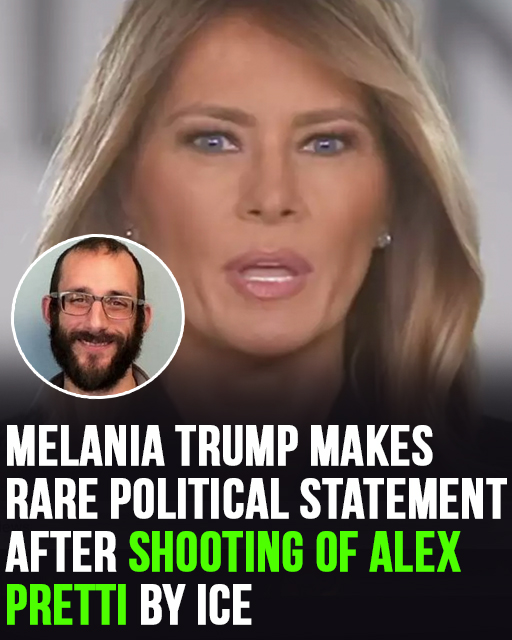
In a Fox News interview on Tuesday, January 27, 2026, Melania Trump addressed the nation on the Minneapolis unrest, saying:
“We need to unify. I’m calling for unity. I know my husband, the president, had a great call yesterday with the governor and the mayor, and they’re working together to make it peaceful and without riots. … I’m against the violence, so please, if you protest, protest in peace. And we need to unify in these times.”
This appeal to peaceful protest and unity echoed similar calls from international leaders in moments of civil strife, but was notably cautious in its tone — stopping short of directly criticizing the federal operation or acknowledging wrongdoing by federal agents.
Why This Statement Matters
-
Rare Political Intervention: The First Lady’s comments represent a notable departure from her usual avoidance of hot-button political issues. Analysts see this as a response to growing national unrest and the need to mitigate further violence.
-
Focus on Peace, Not Policy: Her message focused on calm and unity rather than policy critique. She did not call for a review of immigration enforcement practices, nor did she publicly challenge the actions of federal agents.
-
Support for Collaborative Governance: By emphasizing joint communication between the president, Minnesota’s governor, and the mayor of Minneapolis, her remarks suggested a willingness for bipartisan cooperation addressing civil unrest — a contrast to the heightened partisanship seen elsewhere.
IV. Reactions: Public & Political
Support and Praise
Some observers praised Melania Trump’s call for unity and peaceful demonstration, seeing it as a welcome step toward cooling national tensions. Supporters argued that in a time of intense polarization, such appeals were needed across the political spectrum.
Criticism and Backlash
However, reactions were far from universally positive:
-
Critics called her remarks “tone-deaf”, arguing that urging peaceful protest without acknowledging federal overreach ignored the underlying causes of the unrest.
-
Social media responses included calls for her to advocate more forcefully for policy review and accountability for the agent who shot Pretti.
The debate highlighted broader divisions in the U.S. over policing practices, immigration enforcement, and federal authority. Some conservative commentators backed her message, emphasizing law and order and community cohesion, while progressives and civil liberties groups expressed disappointment at a perceived failure to condemn the shooting itself.
Former and current officials from other administrations also weighed in. Independent voices urged the White House to consider reforms to federal policing tactics and to de-escalate operations that risk civilian harm.
V. The Trump Administration’s Broader Response
In parallel with Melania Trump’s statement, President Donald Trump himself addressed the situation. He called for an “honorable and honest” investigation into Alex Pretti’s killing and emphasized cooperation with elected local officials in Minnesota.
The administration has also reportedly begun drawing back some federal agents from Minnesota in response to public pressure, though officials insist enforcement operations will continue in accordance with federal law.
White House communication has sought to balance support for law enforcement, defense of presidential policy objectives on immigration, and acknowledgment of public concern over use of force. This tightrope walk reflects political realities as President Trump’s approval ratings show vulnerability among key voter blocs concerned about civil liberties.
VI. Minnesota’s Local Dynamics
State Leadership Response
Minnesota Governor Tim Walz (D) and Minneapolis Mayor Jacob Frey (D) met with federal authorities to discuss de-escalation and public safety. The governor has called for transparency and accountability, while also seeking to prevent violence in protests.
Community Impact
Minneapolis has a long history of community activism and scrutiny of law enforcement practices, dating back years before the Pretti shooting. For many residents, the incident revived memories of earlier police violence cases and raised questions about federal intervention in local affairs.
VII. What Comes Next?
Federal Investigation: Independent and federal reviews of Pretti’s death are ongoing. Prosecutors and civil-rights groups have called for public release of investigative findings.
Legal Challenges: Potential civil suits under federal law are being explored by Pretti’s family and attorneys, though such cases face complex legal hurdles.
Policy Debate: The incident has intensified national debate on immigration enforcement boundaries, federal law-enforcement accountability, and the rights of peaceful protesters.
VIII. Broader National Reflection
Melania Trump’s rare plea for unity comes at a moment when the United States confronts deep fractures over governance, civil liberties, and the role of force in maintaining public order. Whether her message softens the national climate or becomes an inflection point in political discourse remains to be seen.
Her intervention — centered on peace and unity rather than direct policy critique — reflects both the challenges and limitations of political messaging in a deeply divided America.
As investigations continue and public pressure persists, the legacy of the Alex Pretti shooting and Melania Trump’s response may shape American political dialogue well beyond the immediate crisis.
