Causes, Mechanisms, and Solutions
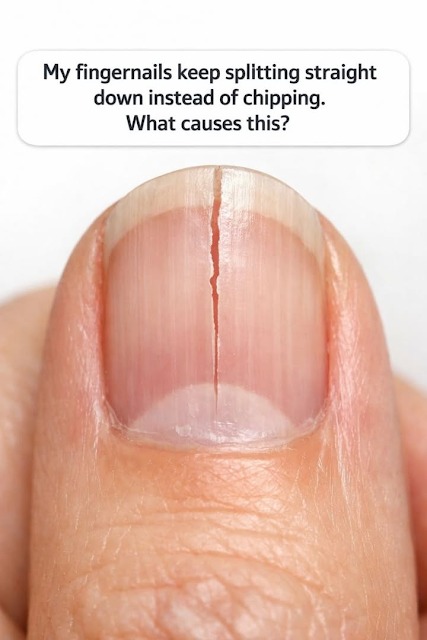
Fingernails are more than a cosmetic feature—they are indicators of overall health and protect the distal phalanges of our fingers. While occasional chipping or minor cracks is common, some individuals experience a more concerning phenomenon: vertical splitting or longitudinal ridging. This splitting is characterized by a nail dividing along its length rather than breaking across its tip. Understanding why nails split vertically requires exploring the structure of the nail, nutritional and systemic factors, mechanical stresses, and dermatological conditions that compromise nail integrity.
The nail plate is composed primarily of keratin, a tough, fibrous protein that also makes up hair and the outer layer of skin. The nail is produced by the nail matrix, located under the proximal nail fold. This growth zone is responsible for the shape, thickness, and integrity of the nail plate. Nails grow continuously at an average rate of 3 mm per month for fingernails, influenced by age, nutrition, and health.
The nail plate consists of several layers:
Dorsal layer: The top, most visible layer that is often smooth and shiny.
Intermediate layer: Provides strength and resilience.
Ventral layer: The bottom layer that adheres to the nail bed and contributes to flexibility.
Vertical splitting occurs when the keratin layers separate along the nail’s longitudinal axis, usually involving the intermediate and dorsal layers. Unlike horizontal chipping, which often results from external trauma, vertical splitting frequently arises from intrinsic weaknesses within the nail structure.
2. Causes of Vertical Nail Splitting
Vertical nail splitting is typically multifactorial, involving environmental, nutritional, and medical factors. These causes can be grouped into four major categories: mechanical stress, hydration imbalance, nutritional deficiencies, and underlying medical conditions.
Even though vertical splitting is less often caused by external trauma than horizontal chipping, repeated mechanical stress can contribute. Common sources include:
Frequent handwashing or exposure to water: Prolonged immersion can cause nails to become brittle and prone to splitting.
Manual labor or typing: Continuous pressure along the nail can exacerbate existing weaknesses.
Improper nail care: Using harsh nail files, biting nails, or applying gel or acrylic nails without proper care can damage keratin layers.
Over time, repeated mechanical stress may cause micro-fractures along the longitudinal axis of the nail, leading to splitting.
2.2 Hydration Imbalance and Environmental Factors
The water content of nails is crucial to their flexibility. Nails with inadequate hydration become brittle and more likely to split. Contributing factors include:
Excessive use of nail polish removers: Acetone strips natural oils and water from the nail plate.
Frequent exposure to detergents: Household cleaning agents can weaken the keratin matrix.
Nails in these conditions may lose their elasticity, making vertical splitting more likely than horizontal chipping.
2.3 Nutritional Deficiencies
Proper nail growth requires sufficient intake of protein, vitamins, and minerals. Key nutrients associated with healthy nails include:
Biotin (Vitamin B7): Enhances keratin production and prevents brittleness.
Iron: Iron deficiency can cause spoon-shaped nails (koilonychia) and longitudinal ridges.
Zinc: Essential for DNA synthesis in the nail matrix.
Vitamin C: Supports collagen production, which strengthens nail beds.
Proteins: Amino acids such as cysteine are critical for keratin formation.
A deficiency in these nutrients can weaken the internal structure of the nail, making it susceptible to vertical splitting.
2.4 Medical and Dermatological Conditions
Several medical conditions can predispose nails to longitudinal splitting:
Onychoschizia: A condition characterized by nail splitting and peeling, often worsened by water exposure.
Psoriasis: Nail psoriasis can cause pitting, ridging, and splitting.
Thyroid Disorders: Hypothyroidism may result in brittle nails with longitudinal fissures.
Eczema or Dermatitis: Chronic inflammation around the nail fold can disrupt nail formation.
Aging: Natural age-related changes reduce nail thickness and flexibility, increasing the risk of vertical splitting.
3. Mechanisms Behind Nail Splitting
The nail’s integrity depends on the cohesion of keratin layers. Vertical splitting occurs when these layers lose adhesion due to:
Keratin disruption: Structural weakness in keratin proteins reduces tensile strength.
Matrix irregularities: If the nail matrix produces uneven keratin, weak points develop along the nail length.
Hydration imbalance: Dry nails become brittle and more prone to longitudinal fissures.
External forces: Constant pressure along the nail can exploit preexisting weaknesses, extending splits from the cuticle to the nail tip.
This mechanism differs from chipping, where external impact fractures the nail across its width rather than along its layers.
4. Prevention and Management
Preventing and treating vertical nail splitting involves a combination of lifestyle changes, nutritional supplementation, and protective measures.
4.1 Nail Care Practices
Moisturize regularly: Use hand cream or cuticle oil to maintain hydration.
Avoid harsh chemicals: Limit acetone-based polish removers and detergents.
Gentle filing: File nails in one direction rather than back-and-forth to reduce layer separation.
Protective gloves: Wear gloves when cleaning or washing dishes to prevent water-induced brittleness.
4.2 Nutritional Support
Continue reading…
